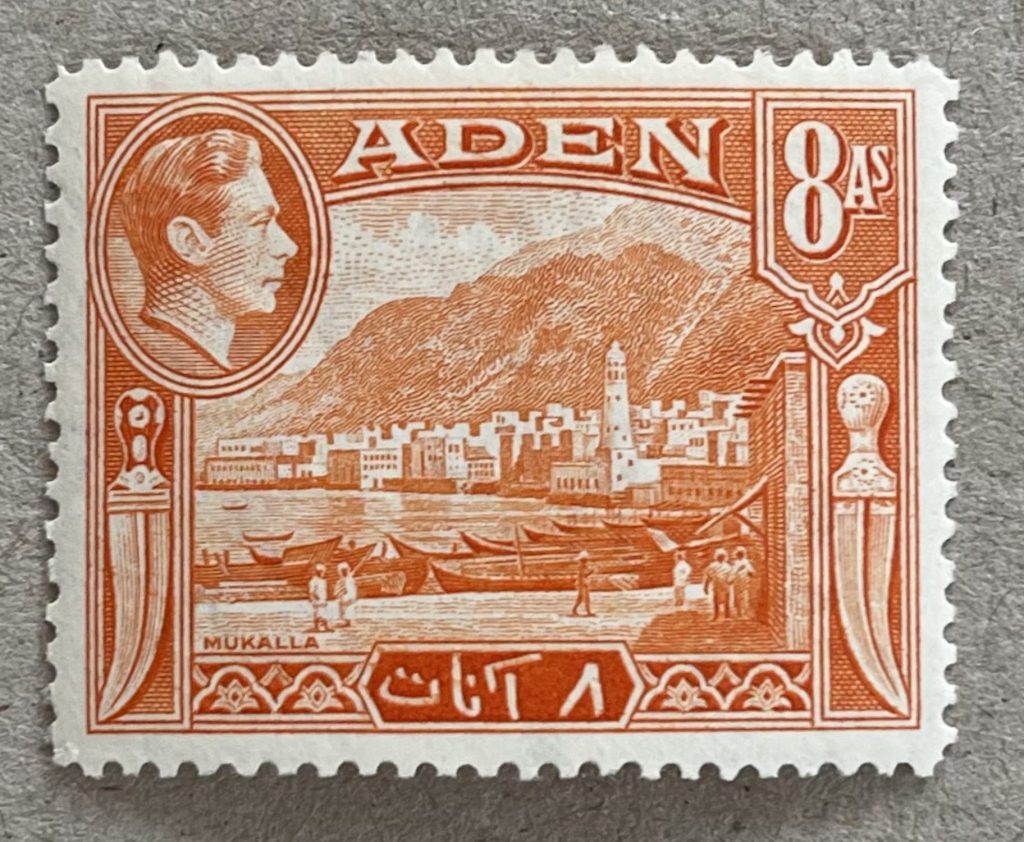
These two came out of an old album I purchased in the Embankment underground stamp market. Somebody else’s collection, somebody else’s years, and now mine for now.
Aden, 1939.
The first is eight annas, in a warm red-orange, like a harbour wall at the end of the day. The second is two and a half annas, in a deep navy blue, like the same harbour an hour after dark.
Slide between them.
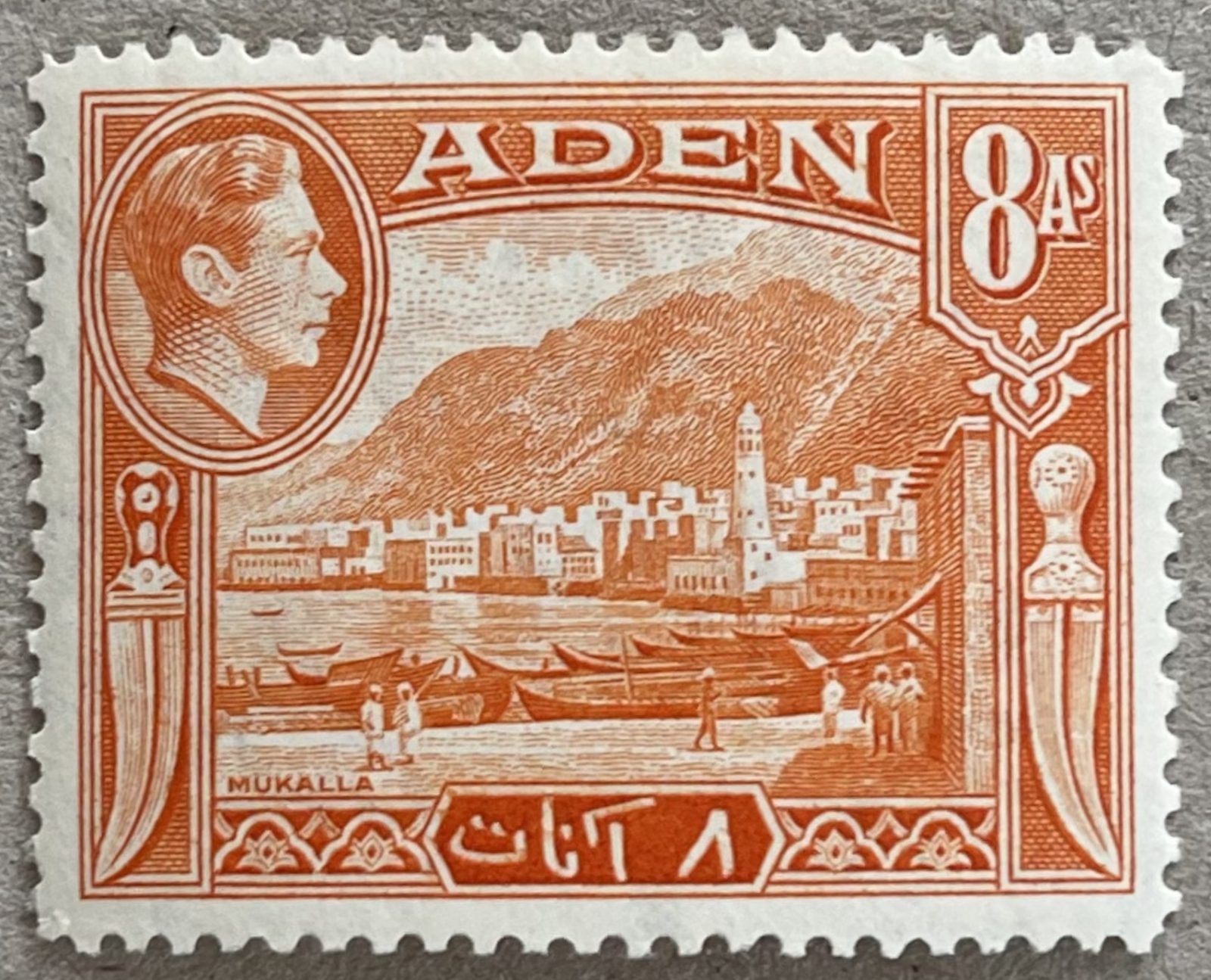
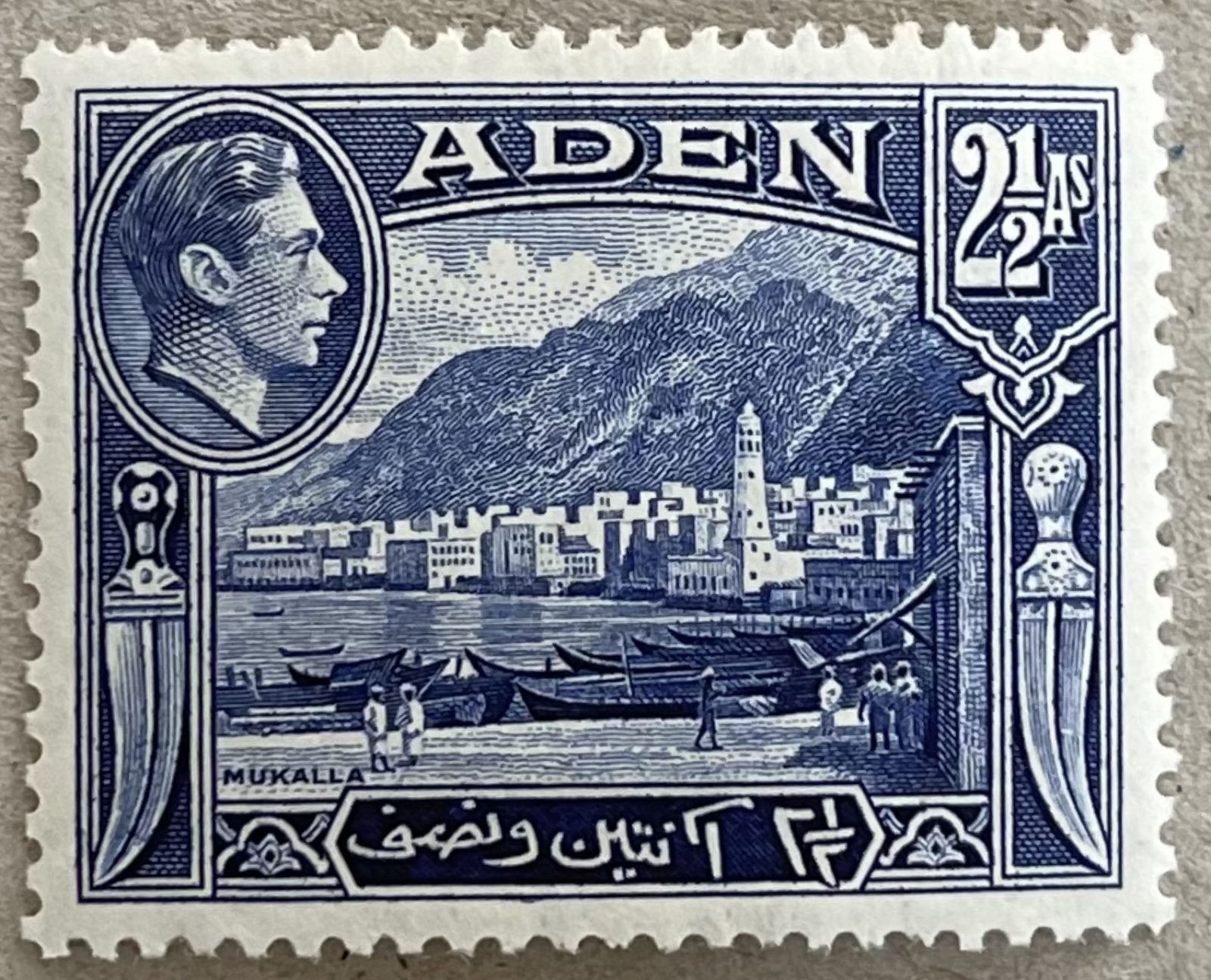
They come from the same set, issued in January 1939, with George VI in the corner. Aden had only stopped being run from British India two years before, which is why the money is still in annas. Each value is written twice. In figures, top right. In Arabic, in the panel at the bottom. On the blue one, the Arabic spells it out in words. Two annas and a half.
The engraver gives you a harbour. A wall of mountain behind. White houses packed along the water. Dhows pulled up on the beach, and a few figures standing about, the way people do near boats. Down each side of the frame, a curved dagger. A jambiya as if to guard both edges.
And rising above the rooftops, a tall white tower.
That’s what caught my eye. A white tower on a waterfront. I believed I’d found a lighthouse. Twice.
I hadn’t.
As far as I can read, it was never a lighthouse. Instead a minaret. The light there today is a modern tower on the breakwater, put up around 2009. In 1939 the tallest thing on that shore was calling people to prayer, not ships to harbour.
The old photographs make it easy to see why I was fooled. There it is on the left of the harbour, white and tall above the dhows. And by the late 1970s, painted with blue bands and a blue dome, standing over the water like every lighthouse I have ever loved.


I’ve kept them in anyway. I love these stamps far too much to leave them out.
The stamps say ADEN across the top in big letters. But this isn’t Aden. Mukalla is a historic port city about 480 kilometres up the coast to the east. In 1939 it was the capital of the Qu’aiti Sultanate, within the Eastern Aden Protectorate. Under British protection, but with its own sultan. Its own town, borrowed to stand in for somewhere else. In two colours.
It began as a fishing village nearly a thousand years ago. The name is said to come from an Arabic word for keeping, or looking after. A sheltered harbour.
Not every light on a coast is for ships. Some towers just stand there, the tallest thing in town, and I like to think the boats coming in found their way home by it anyway.
These are the ones I need to get. The two and a half annas in that same blue. Then the same stamp again after 1951, when Aden swapped Indian annas for East African cents and shillings and the old stock was overprinted. 15 CENTS, stamped right across the mountain.
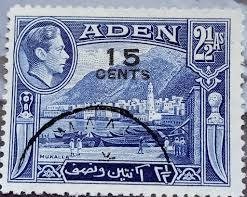
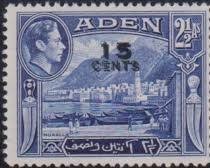
The wish list starts here.


Leave a Reply