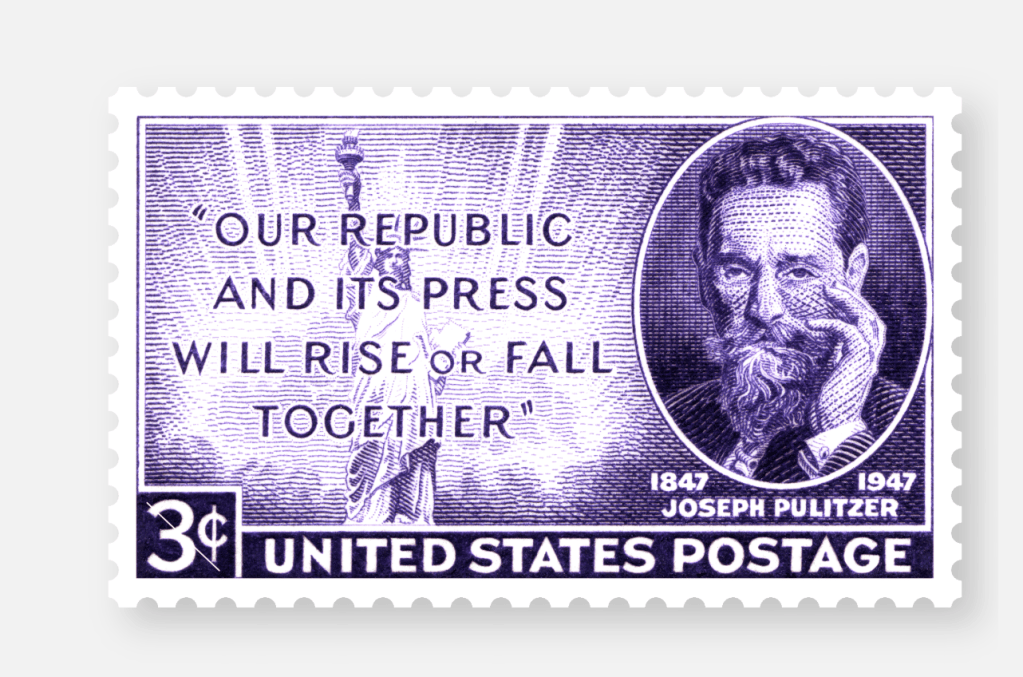
Someone wrote to me a year ago and asked if I knew the Statue of Liberty had once been a working lighthouse.
I didn’t. I looked it up, and I was excited and slightly annoyed at the same time. My lighthouse stamp collection is much bigger than I thought, because every stamp with the Statue of Liberty on it now counts.
They gifted me this stamp with their note. It isn’t a lighthouse stamp in the usual sense, but she was a lighthouse for sixteen years.
When she was dedicated in October 1886, she was placed in the care of the United States Lighthouse Board. Nine arc lamps were fitted in the torch, about 305 feet above the sea. The light was said to carry 24 miles.
The paperwork got in the way early. In November the light went dark for two weeks while officials argued about who would pay for it. She was properly working as a lighthouse by 22 November.
Her keeper was Albert Littlefield, and he stayed for all sixteen years. He knew enough about electricity to be paid $1,000 a year, more than most head keepers, and he lived on the island with his family and assistants.
The Board never warmed to the job. It didn’t think she mattered much for navigation, and by 1889 she wasn’t even listed among the harbour lights. She cost around $10,000 a year to run. On 1 March 1902 she was discontinued as an aid to navigation.
The man on the stamp had a hand in getting her there at all. In 1885 Joseph Pulitzer used his newspaper, the New York World, to raise money to finish the pedestal. It collected more than $100,000, mostly in small donations.
The stamp was issued in New York on 10 April 1947, a hundred years to the day after his birth. It cost three cents, and about 120 million were printed.
What I noticed is that the Statue sits behind the words, pale and half hidden. Rays fan out from her torch the way you would draw the beam of a lighthouse. I doubt that is an accident.
The words are Pulitzer’s, from an essay in 1904 about training journalists: “Our Republic and its press will rise or fall together.”
He was not a saint. In the 1890s his New York World fought Hearst’s New York Journal for readers with sensational, exaggerated stories. Many historians think that rivalry helped push the country towards the Spanish-American War in 1898. But I think the sentence is right anyway.
I read the news every day and rarely think about who went somewhere cold, or dangerous, or dull to get it. A free press does not mean a perfect one. It means someone is free to check those in power, and to be corrected in public when they get it wrong.
I think that matters more now than at any time I can remember. Newsrooms are smaller, fakes are cheap and fast, and in too many places reporters are threatened or jailed for doing their job.
A lighthouse doesn’t steer the ship. It shows you where the rocks are, and a good newspaper does the same.
A letter cost three cents to send in 1947. The idea on this stamp has cost a good deal more to keep.


Leave a Reply